
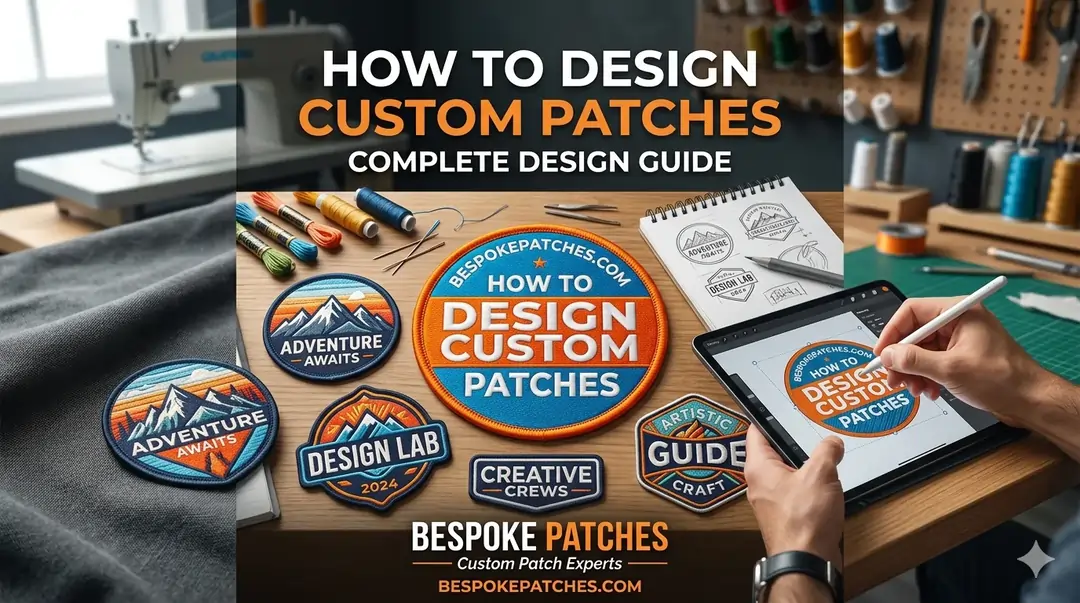
How to Design Custom Patches | Complete Design Guide
When you think of making a statement through something small, yet effective, what instantly comes to your mind? Custom patches are one of the most effective ways to make a statement through a small yet meaningful design.
These tiny emblems have a timeless appeal, allowing people to express identity and meaning without being overly loud. No matter on which surface patches are stitched onto, their appeal and charm always remain the same and deliver identity, emotion, and meaning at the same time.
Here, maintaining that your patch remains unforgettable in the memory of viewers is quite important because if it does not spark a thought in the mind of the one who is looking at it, the whole effort will eventually go to waste.
What Makes a Patch Design Instantly Attractive and Truly Effective?
It strikes a balance between personality and simplicity.
One common mistake in patch designs is putting too many things in them. The best designs are not complicated. They actually come with a twist that will be remembered.
It is not aesthetics, it is reflection.
A patch of a biker club will look totally different compared to a patch of a corporate team. The reason behind it is that context shapes design decisions, so if a patch reflects the approach of your brand, it will offer a more bespoke outlook.
It takes into account practical applications.
Designing realistically is important. For affordable custom patches, you have to make the design on the screen so that the manufacturer, while doing stitching, does not miss the details that are sometimes easily lost because here clarity is quite essential.
How Can You Make Your Own Patches?
Begin with a Clear Design
The first and most important step in the patch-making process is determining what the patch actually represents. Only open the software when you are clear on every aspect and have determined whether your patch is for identity, authority, creativity, or belonging. With a purposeful beginning, each design decision will be more meaningful.
Select the Appropriate Patch Type
The type of patch you choose will directly affect the final appearance of your design. If you are looking for more affordable options, always remember that the technique appears to be a significant factor, as it will affect the cost and the appearance.
You can decide on the patch type later, but at this point, it is beneficial to focus on your approach to avoid having to redesign it later.
Focus on Shape Psychology
The majority of individuals who go for patch designing opt for circles or rectangles, but understanding the fact that the shape you are giving to the patch should be meaningful is necessary.
- Round patches are welcoming and community-based.
- Shields suggest authority and tradition
- Handmade shapes are unique but need to be done with care.
The selection of the appropriate shape determines the tone even before the viewer observes the design.
Use Colours that Play on Fabric
Colours do not act on the thread as they do on screens. Bright colour can seem a bit muted when observed, and a gradient theme can be tough to produce for the patch. Rather than depending on heavy colour shifts, keep your focus on clean and contrasting shades that look visually appealing.
Typography That Lives Through Stitching
You can look for fonts on a computer, but here it is necessary to remember that there are certain fonts that do not live up to the stitching and might not work for embroidery purposes.
There are chances of thin lines disappearing and too decorative fonts being unreadable. This is why clean lettering, which is bold, is the best as it is also readable from a distance.
Test Design in Real Life
For personalized business patches, you must observe the depth and the final look before handing them out to your clients and customers. So, must visualize the patch before deciding.
- Focus if it is still noticeable on a jacket
- Observe if it is readable on a uniform
- Make sure it looks suitable on a bag
Types of Custom Patches and Their Applications in the Industry
| Patch Type | Primary Use | Industry Application | Practical Implication |
| Embroidered | Classic branding and uniforms | Military, corporate, clubs | Durable, traditional appearance, with little fine detail |
| Woven | Detailed designs with small text | Fashion, retail brands | Allows fine detail, has low texture |
| PVC | Weather-resistant and contemporary patches | Outdoor equipment, security, sports | Waterproof and durable with a less traditional look |
| Chenille | Soft, textured patches | Schools, athletic teams | Bold and eye-catching, yet bulky |
| Leather | Premium branding | Luxury goods and lifestyle brands | high-end appearance with limited color options |
| Sublimated | Photo-like patterns | Promotional goods, events | Unlimited color, although less durable |
| Velcro backed | Removable patches | Tactical gear, uniforms | Flexible use, but high prices |
| Iron-on | Simple to apply | Retail, DIY markets | Convenient but for temporary use |
FAQs
What are the key elements of a great custom patch design?
Distinctive shapes, vibrant colours, and legible text are among the essential elements for a successful patch design. It must also serve its intended purpose and still look good when it is sewn onto clothing material.
What should I choose as the file format for designing patches?
If your design contains vectors, then formats such as AI, EPS, or SVG will be ideal for you. In case you don’t have vectors, PNG file types can work well.
How many colors should I use in a patch design?
To keep the design simple, visually appealing, and economical during production, it is preferable to utilise three to six colours.
What design mistakes should I avoid when creating patches?
Avoid extremely intricate elements, small wording, an excessive number of colours, and designs that do not take stitching into account.
Can I get help designing a patch professionally?
Indeed, a lot of manufacturers and independent designers provide expert design services to polish your concept and make sure it is ready for production.
The Power of a Well-Designed Patch
Patches have been part of history for a long time, and they have served their purpose of delivering eye-catching and meaningful messages. But also designing custom patches is an art, and it requires careful strategies to balance creativity with aesthetics. When your approach is centred around intention and clarity, the outcome goes beyond something decorative and becomes something memorable.

I am the editorial voice behind the BespokePatches.com blog, where I explore the artistry, craftsmanship, and innovation behind premium custom patch production. My content highlights design precision, fabric selection, stitching techniques, and branding strategy to help businesses create patches that truly stand out. From embroidered and PVC to woven and chenille styles, I provide in-depth guidance on choosing the right materials and finishes. My goal is to show brands, clubs, and organizations how bespoke patches can elevate identity, strengthen recognition, and add lasting value to their merchandise and uniforms.