
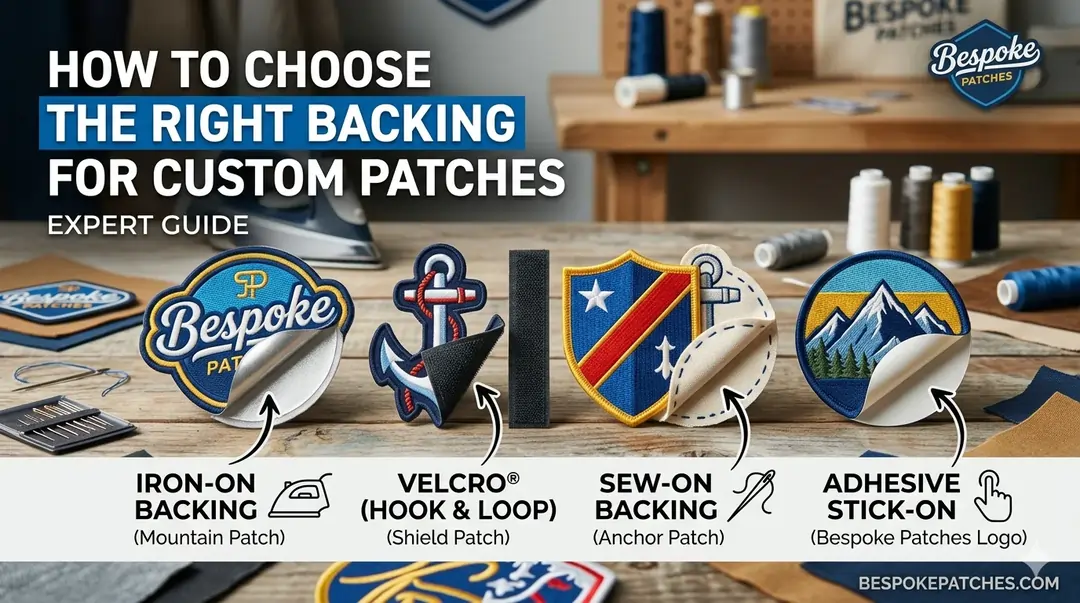
How to Choose the Right Backing for Custom Patches | Expert Guide
When it comes to custom patches, it is easy to admire their visual appeal and the way they communicate a message so effectively without being overly loud.
Even though they are quite small, these mini emblems can draw viewers’ attention to their outlook, which is why, whether it’s a brand, a corporation, an association, or even an academic institution, all of them take advantage of them. The primary focus of custom patch designers is on colours, forms, and logos because those are the visible elements, which makes sense.
However, the backing is often disregarded. If we look closely, the patch’s functionality is determined by this hidden layer, which also demands the same amount of attention.
No matter how exceptional your patch looks from the outside, if it does not meet its purpose, what makes magnetic backing a sensible option for reusable or fragile applications? Due to poor backing, it can fall off, wear out quickly, or simply become inconvenient to use. It is important to determine the right backing to make sure the durability and stability of your patch.
Which Patch Backing Types Are Most Commonly Used?
Let’s break down the patch backing type.
Why Sew-On Backing is Designed for Durability and Regular Use?
When durability is the most important factor, sew-on backing is the most dependable choice. The patch is sewn straight into the cloth rather than using glue, which keeps it incredibly secure even after many washings and harsh use.
For this reason, sew-on patches are highly favoured in sectors like the military, law enforcement, corporate clothing, and hospitality.
For example, patches that won’t peel or fade over time are necessary for uniforms worn on a daily basis in harsh environments, such as those worn by hotel employees or security personnel. Sew-on patches are nearly always the safest option if they are intended to remain permanently on coats, workwear, or uniforms.
Why Velcro Backing is Designed for Adaptability and Changing Requirements?
If you are seeking a backing option that is simple to remove and replaceable as well, you can totally go for the Velcro backing. It allows users to change designs as needed rather than making them permanent.
This option is especially popular in military training, law enforcement, and hobby communities because it makes things easier for them. For example, because players prefer to switch up their team identities or duties based on the game, custom made airsoft patches sometimes implement the use of this backing type.
Similarly, Velcro is the most sensible option when field teams or emergency responders need interchangeable identification.
How is Iron-On Backing Ideal for Fashion and Quick Application?
Next, we have another excellent option: iron-on backing, which is designed to provide convenience and ease of use.
The heat-activated adhesive is a favourite among those seeking a simple solution because it allows patches to be applied rapidly without stitching. In the fashion, retail, and DIY industries, where speed and appearances are more important than long-term durability, this backing is often used.
Iron-on patches are usually used by clothing companies for ornamental collections, and people use them to customise hoodies, trousers, and purses. However, it is more appropriate for casual wear than heavy-duty use because heat and washing can weaken the adhesive over time.
How Come Adhesive Backing is Ideal for Promotional and Temporary Use?
If you are the one who is still using stickers and want something more bespoke and practical that also reflects a premium look, then the solution is right here. We have adhesive backing, which is similar to stickers in that it may be peeled off and reapplied.
It is ideal for short-term use because it is quick, easy, and does not require any additional tools. Exhibitions, schools, branding initiatives, and event marketing often use this support and give their apparel a captivating touch through it.
For example, patches can be distributed by companies during promotional events in which long-term usage is unnecessary. Although it is very convenient to use, it should not be used for a prolonged period, especially when applied to clothes that are frequently washed and handled.
What Makes Magnetic Backing a Sensible Option for Reusable or Fragile Applications?
Lastly, but for sure not the least, we have another remarkable backing option for the individuals who are always on the search for a backing type that is easy to use. When you wish to prevent fabric damage, magnetic backing provides a special option. The patch is held in place by magnets rather than sewing or adhesive.
In formal settings, corporate industries, and luxury branding, where clothing must stay undamaged, this type is actually very much favoured. Another excellent quality is magnetic backing prevents holes and residue, which is advantageous for name badges on suits or expensive uniforms.
It is also helpful for those who do not want to commit to a permanent attachment but still want a clean, reusable choice that leaves no marks or holes on their object, apparel or anything.
How Can Choosing the Right Backing Improve Your Patch Experience?
We cannot underestimate the fact that sometimes backing is overlooked, but only if we understand how a significant and important role it plays in the whole process a custom patch maker performs.
It has a significant impact on the functionality and feel of your patch over time, and when applied to products such as caps, bags, and clothing, the proper backing not only keeps your patch in place but also enhances the overall experience.
A badly selected backing may cause patches to rip off after a few washes, make it impossible to adhere to some materials, shorten its lifespan, and generally irritate the user.
When patches are applied to objects that are usually handled or moved, such as backpacks or caps, these problems become even more apparent. However, selecting the ideal backing for particular applications, whether it is durability for headwear, flexibility for clothing, or strong adherence for bags, creates a more seamless and distinctive experience.
It ensures that your patch not only maintains its safety but is also harmoniously integrated into the look and performance of your equipment. The effectiveness of your patch depends on whether it has the right support; this makes it effortless, reliable, and purpose-driven.
FAQs
What are the most common backing options for custom patches?
There are multiple options, but the most common are iron-on, velcro, and magnetic backing. Each serves a different purpose depending on the user’s needs, whether it is durability or convenience.
How do I choose the best patch backing for durability?
If you are looking for durable options regarding backing on patches, you can go for the sew-on ones, as they are the best choice for such purposes. It offers a strong and sturdy attachment, which is also permanent and can tolerate multiple washings and wear.
Can I change the backing type after the patch is made?
Such approaches are possible in some of the few cases, but it is not an ideal option to replace the backing after the patch has already been made. This modification and transformation can have an effect on the quality and longevity, and sometimes extra material and efforts are also required.
What is the difference between iron-on, sew-on, and Velcro backing?
Velcro makes it simple to apply and remove patches, and if we talk about sew-on patches, it requires stitching for durability. On the other hand, iron-on uses heat bonding for rapid application.
Which patch backing is best for uniforms and workwear?
You can choose sew-on backing for the apparel, such as workwear and uniforms. It is actually the ideal choice because of its ability to withstand natural elements that might affect the durability of the clothes, especially when they have to be washed and worn for a long time.
Conclusion
Many people, especially those who use patches for branding or messaging, find the patch-making process quite challenging and sometimes even get outcomes that vary from what they have in mind.
You can always overcome this issue by learning what goes into making and how backing can totally elevate the overall look and practicality of a patch. You are already investing a lot in patches, and if a patch loses durability after only a few uses, it can be frustrating.
So, always make the right choice and opt for the one that brings convenience in your life and withstands the multiple washes and also high usage.

I am the editorial voice behind the BespokePatches.com blog, where I explore the artistry, craftsmanship, and innovation behind premium custom patch production. My content highlights design precision, fabric selection, stitching techniques, and branding strategy to help businesses create patches that truly stand out. From embroidered and PVC to woven and chenille styles, I provide in-depth guidance on choosing the right materials and finishes. My goal is to show brands, clubs, and organizations how bespoke patches can elevate identity, strengthen recognition, and add lasting value to their merchandise and uniforms.